
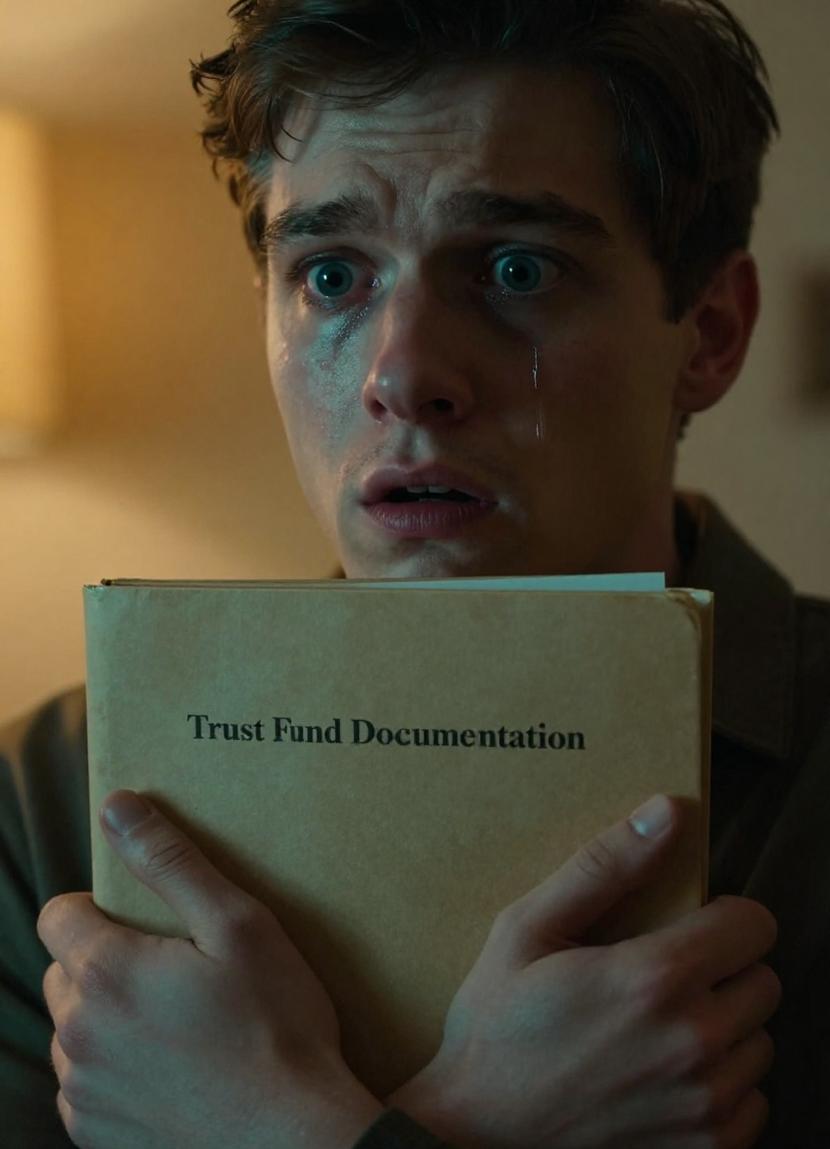
My name’s Ethan. I’m 21. Until that Thanksgiving night last year, I genuinely believed I was just a kid dealt a rough hand in life. You know—the relentless student loans looming overhead, part-time shifts at the college café, shoes held together by duct tape, and ramen noodles on repeat five nights a week. I wasn’t angry, not truly. I accepted that life could be harsh and told myself my parents did what they could. I never expected anyone to just hand me anything.
But that evening cracked open everything I thought I knew about my family—the truth began with one sentence from my grandpa.
Thanksgiving in our family was always a little wild. My mom’s side buzzed with noise, flair, and zero filter. But that year, my dad’s side was hosting, which usually meant things were quieter, polite. Grandpa carved the turkey with meticulous care, a sacred ritual, while Grandma slipped around serving her legendary cornbread, pretending not to notice cousins sneaking extra helpings. It felt normal.
I was home from college for the weekend, already dreading the mountain of midterms waiting for me. I found myself sitting beside my little cousin Logan, who was too busy shoveling mashed potatoes to chatter much. My parents occupied the far side of the table, chatting with my uncle and aunt as if everything was peachy. Like they hadn’t ignored most of my panicked texts that semester, begging for help with rent.
We were halfway through dinner when Grandpa lifted his glass for a toast—a rare, sentimental gesture.
“To family,” he said, voice shaky but warm. “And to seeing our kids grow into the people we can be proud of.”
Murmurs of agreement and clinking glasses followed. Then his gaze locked on me, steady and direct.
“And Ethan, I’m glad to see you’re putting the college fund to good use. Your grades have been excellent.”
Time stopped. Forks hung suspended mid-air. My heartbeat pounded like a drum in my ears. I blinked, confused.
What fund?
The room fell unnaturally silent. I caught my dad choking on his drink, coughing awkwardly into his napkin. Mom’s face drained of color like someone pulled the plug. Aunt Heidi’s eyes flicked nervously between them. Even Logan paused his chewing.
Grandpa’s brow furrowed in confusion. “The college fund we set up when you were born. You didn’t know?”
And then, innocent Logan whispered, “Wait, you didn’t know?”
I couldn’t speak. It felt like the air had been knocked out of me. Slowly, I looked at my parents, searching for any hint—but neither met my gaze. Mom toyed absently with her peas like they held the answers. Dad’s hand shook slightly as he reached for his wine glass again.
“Ethan,” Grandpa repeated, clearly bewildered. “Hasn’t that fund been helping with your tuition? We put money in it every year — birthdays, Christmas, even when times tightened.”
I swallowed hard. “No one ever told me about a fund,” I whispered.
Grandma’s lips parted, as if she wanted to say something, but couldn’t find the words. Aunt Heidi leaned forward, eyebrows raised, fork resting silently on her plate. “So… who’s been managing it then?”
That’s when the facade began to crumble.
Dad cleared his throat, voice low. “We… we didn’t think you needed to know.” Eyes fixed on his plate.
“You didn’t think I needed to know I had a college fund?” My voice cracked like glass.
Mom blurted out, voice tight and defensive, “We used the money… for the house, bills, emergencies. We thought it was the right call.”
Grandpa’s eyes darkened. “What do you mean ‘used it’?”
Dad shot Grandpa a guarded look before turning to me. “We were struggling, Ethan. The recession hit us hard. The roof was leaking. And your brother needed braces.”
“My brother?” I snarled, cutting in. “The one who never went to college? The one who got a brand-new car on his 18th birthday?”
Mom’s voice rose. “It was for the family. You wouldn’t understand. You were just a kid. You wouldn’t remember how bad it got.”
I pushed up from my chair, the scrape echoing around the stunned room. Every eye fixed on me.
“You could have told me,” I said, voice shaking with raw hurt. “You let me drown in loans. Made me work twenty hours a week on top of classes. I thought it was because we didn’t have the money. I thought I was doing my part, working hard, not asking for help. But all this time, you were sitting on my college fund?”
Dad’s voice wavered. “It wasn’t like that.”
I laughed bitterly. “No, I’m making a scene? You lied to me for years, silenced me, and I’m the problem?”
Grandpa’s voice cut through the room, steady and firm. “That money was meant for Ethan. We made that crystal clear when we set up the trust.”
“Well, maybe if you hadn’t insisted on putting it in our names as custodians…” Mom began but stopped, catching the steel in Grandpa’s eyes.
“Because we trusted you,” he said quietly. “We trusted you’d do right by your son.”
Silence swallowed the room. Cousins stared anywhere but. Logan’s gaze dropped. Aunt Heidi looked uneasy. Uncle leaned back, expression tight.
I sank back into my chair, legs trembling.
“How much was in it?” I asked Grandpa.
He hesitated, then said, “About $40,000 by your 18th birthday. Probably more with interest. We kept adding.”
Forty thousand dollars. The weight of it hit me like a punch.
That money could have wiped out every loan, covered books, maybe even let me breathe.
I stared into my parents’ faces. Mom looked like she might cry; I couldn’t care. Dad’s anger was thick but devoid of shame — just the look of a man caught in a corner.
“We did what we had to do,” he muttered.
“No,” I said, voice colder. “You chose what was convenient for you.”
Grandma murmured, voice breaking, “We need to talk… all of us.”
But I wasn’t listening anymore. I pulled out my phone, fingers trembling as they moved with a will of their own. Not to post or rant—just to open something I’d stashed away months ago: a document detailing every cent I’d scraped together, every scholarship clawed for, and a modest bonus from my summer internship at the startup.
Dad’s eyes flicked to the screen and froze.
He knew exactly what it was.
But the truth wasn’t ready to be spoken yet.
—
Part 2: The Aftermath
That night, sleep eluded me. After the dinner dissolved into a quiet, awkward retreat—Grandma gently herding everyone towards dessert like sugar could patch the cracks—I packed lightly and drove back to my college apartment early. I left a short note for Grandpa, thanking him for the dinner and for accidentally unveiling the truth.
The silence in the car was deafening. I kept replaying Logan’s innocent whisper, “You didn’t know?” The painful weight behind those few words struck me like a hammer.
This wasn’t just about money anymore. It was about trust. My entire childhood rewritten by two people who saw me less as a son and more as a resource.
That document? It was my lifeline, the ledger of my struggle—every scholarship, every paycheck, every extra gig worked late into the night. I’d spent nights in my tiny apartment, balancing desperation and pride, choosing ramen over shoes.
Meanwhile, they chose braces for my brother, house repairs, bills.
But I wasn’t just an intern anymore. Two weeks before Thanksgiving, that same startup offered me a full-time role with a solid salary, signing bonus, and stock options. They said I was on a fast track to leadership if I kept up.
I’d planned to tell my parents when I got home—hoping for pride. Now? I wasn’t sure if I wanted them to know anything at all.
The following days were a haunting quiet. No calls, no texts from them. Grandma reached out once, a simple text: ‘Thinking of you. Love you.’ I stared at it, typed “Thanks. I’m okay,” then deleted before sending.
I remained silent. Unsure how to respond.
Soon, messages drifted in:
Mom: “Ethan, we need to talk. Please, can we meet before you return?”
Dad: “You’re being immature. It’s complicated. Call me.”
Uncle: “Hey, just want you to know I had no clue about the fund. That’s wrong. I’m here if you want to talk.”
But I said nothing back.
Then, hands shaking, I contacted the bank tied to the trust Grandpa mentioned. With Grandma’s quiet help forwarding emails, and a tense call with a confused but helpful advisor, I learned the fund had been drained over seven years—all withdrawals approved by my parents.
The paper trail was undeniable.
I asked about options. The advisor suggested legal aid—“This could count as misappropriation, especially if the trust was specifically for your education.”
I made an appointment with campus legal aid, armed with every scrap—trust papers, bank records, my own financial history, even Grandpa’s emails about adding “something extra for your future.”
The rep looked at me with a weight I wasn’t ready for. ‘Ethan, this could be felony territory.’
I couldn’t believe it. My parents—the people who tucked me in, taught me to ride a bike, got me a Lego set after surgery—now possibly criminals in my life story.
I dropped off the grid for a while. No replies, no posts. Just quiet. But silence made their voices louder.
Then one Sunday night, a knock. My dad, looking exhausted and worn.
“Can I come in?”
I stayed frozen.
“Fine. I’ll talk. You listen.”
He stood awkwardly, hands buried in pockets. “We never meant for it to go this far. We thought we’d pay it back. You were young, you wouldn’t notice. Then we fell behind, and… it spiraled.”
I looked at him, anger and grief mingling. “You could have told me.”
“I know.”
“Mom thought you’d resent us. She wanted to wait until we could recover.”
“You had 18 years,” I said coldly.
He flinched, then whispered, “We didn’t just use it for ourselves. Your brother’s had his struggles. He’s needed more help. You always managed—we thought you could.”
“So I was the forgotten kid because I was ‘low-maintenance’?”
He didn’t answer.
“What if Grandpa hadn’t said a word? Let me drown in debt?”
He looked up, eyes glassy with regret. ‘I don’t know.’
The raw honesty shook me. I nodded, closed the door quietly.
That night, the grief settled deep. Parents weren’t infallible—they were flawed people who chose survival over honesty.
—
Part 3: The Reckoning
Next morning: a text from mom. Four words. “We’re so, so sorry.”
I didn’t reply. Sat through class feigning focus, but my mind replayed my dad’s words, ‘You’ve always managed,’ like a sentence meant to punish.
That evening, I drafted a formal legal complaint. The campus advisor had outlined the path: if the trust was set for me and clearly educational, their use was misappropriation, possibly criminal.
I filed it quietly, copied the bank and my advisor. Grandpa hadn’t been told yet—I wasn’t sure how he’d react.
Two days later, a blocked call. Mom, raw with emotion.
“Please don’t do this. We’ll pay it back. We can fix this.”
I asked, steady. “How much?”
She stumbled. “We… didn’t keep track. Years of withdrawals.”
“The bank has records,” I said.
Silence. “We thought it wouldn’t matter. You have scholarships. You’re doing fine.”
‘Fine.’ The word cut deep.
“I ate canned soup for years, walked miles ’cause I couldn’t afford bus fare. You left me to survive while pretending the fund wasn’t there. And want me to be grateful I managed?”
“It was for the family,” she whispered.
“No. It was survival. And you chose who mattered.”
Click.
The next week, word got around—maybe Aunt Heidi or Logan let slip. Grandpa called that Sunday.
We met at a cozy bistro near campus. He was already there, stirring black coffee, eyes heavy.
“I’m sorry,” he said simply.
“You didn’t do this,” I replied.
“No. But I trusted those who did.”
He’d already dealt with the bank; the fund was gone, but they were cooperating.
“If you want to press charges, you have every right.”
I stayed still.
He sighed. “Your dad asked me to put the trust in their names, citing safety and convenience. I believed him.” His eyes held shame. “I should’ve known better.”
He slid an envelope across the table.
“I can’t undo this, but this is yours.”
I stared, hesitant.
“It’s not enough to cover it all, ten thousand dollars, but it’s a start. And I’m revising my will: when I’m gone, everything will go into a trust only for you. No one else touches it.”
I finally saw him. Finally felt the belief that was missing elsewhere.
That night, I opened the envelope—ten grand. A lifeline from the one who still believed.
The next day, I filed a formal complaint. And I started planning—for winter break, for Christmas at our house.
—
Part 4: The Christmas Gift
Christmas arrived too fast. For the first time, I dreaded coming home—not the silly kind, but the bone-deep dread of walking into a battlefield. I packed light, no gifts, no lies.
I’d told Grandpa I was coming. He only asked, “You sure you’re ready?”
I nodded.
The house looked perfect: snow dusting the lawn, warm lights glowing through the windows, music humming soft.
Inside, the scent of cinnamon and roasted meat wrapped around me. Mom’s laughter was a little too loud, Dad sat, glass in hand, chatting with Uncle like the past month never happened.
They froze when they saw me. Mom’s smile snapped. Dad stayed seated.
I skipped the chit-chat. Dropped my coat and walked toward the dining room, where the family waited, tension thicker than gravy.
Grandpa greeted me with a nod; Grandma avoided my gaze. Brother glued to his phone, ignoring me.
Dinner was a dance of silence. Small talk—weather, traffic—but not a word about the trust or the complaint. They thought I might back down. That I’d be their good kid again.
But I wasn’t here to play nice.
After dessert, Dad rose to toast. His usual spiel about family and love.
He said, “We’re proud of how far our kids have come. Even through tough times, we stick together.”
That was my spark.
I stood. “You stick together,” I echoed. “Except when it came to being honest. Except when it came to me.”
Silence fell like a hammer.
I pulled a folder from my bag, thick with documents, labeled sections and all.
“That’s every cent. Every withdrawal from my trust, matched to my loan statements. In case anyone here doubts I’m overreacting.”
Mom’s face crumpled; Dad’s jaw clenched. I looked at Grandpa. “You asked if I was ready. I am.”
Then, to the whole room, “I worked three jobs through college. Skipped meals. Missed my own life because I thought we had no money. I blamed myself. Believed I was just unlucky. Meanwhile, my parents drained the fund my grandparents created for me.”
My brother finally looked up. “Some of it was for me.”
“Yeah,” I said, meeting his eyes. “Braces. Private tutoring. New laptops every year. While I taped mine back together.”
Grandma’s voice cracked. “We didn’t know, Ethan. I’m so sorry.”
I nodded. “I believe you. But this isn’t just about money. It’s about respect. Trust. Choices.”
Turning to my parents, “You could’ve told me any time—before or after it was gone—but you didn’t. You let me struggle alone, believing we were all in this together.”
Mom whispered, “We thought it was best.”
“For who?” I asked. “For me? Or for the version of me that didn’t ask questions?”
No answer.
I took a breath. “I filed a complaint with the bank. The legal process is underway. I’m not trying to destroy you. I’m demanding accountability. Because actions have consequences. And I’m done carrying this alone.”
Dad stood slowly. “You’re suing us? Your own parents?”
“No,” I said. “I’m holding you responsible.”
He scoffed. “You’d really tear this family apart over money?”
“No,” I said. “You did that the moment you decided I didn’t matter.”
I left the folder on the table and walked toward the living room. Everyone remained frozen. I took out one final envelope—the real “Christmas gift”—and placed it carefully on the mantle.
“I won’t stay tonight. Don’t know when, or if, I’ll come back. That envelope has all the legal documents and a letter explaining everything. So no one can say ignorance was an excuse.”
Mom was crying; Dad stared blankly.
Grandpa came over, quiet. “You don’t have to face this alone. You have more family than you think.”
I nodded. “I know. Thank you.”
He hugged me—the only one.
Then I stepped out into the cold night. No one followed.
A week later, the bank confirmed an investigation. Fraud or misappropriation could mean my parents were forced to repay or face penalties. No celebration—just a necessary reckoning.
I used Grandpa’s $10,000 to pay down my loans and transferred the rest to a new account only I controlled.
I graduated with honors that spring, received my first paycheck months later, moved into a better apartment, and finally bought shoes that didn’t need duct tape.
My parents and I haven’t spoken since Christmas. But I sometimes think back to that night—when Grandpa’s offhand comment cracked open my world.
And I realize—it wasn’t losing money that broke me. It was losing belief. The bitter truth that those who should have protected me… never truly did.
But here I am—still standing. And now, finally, I know my worth. Not tied to a trust fund, but because I stopped trusting the wrong people.