
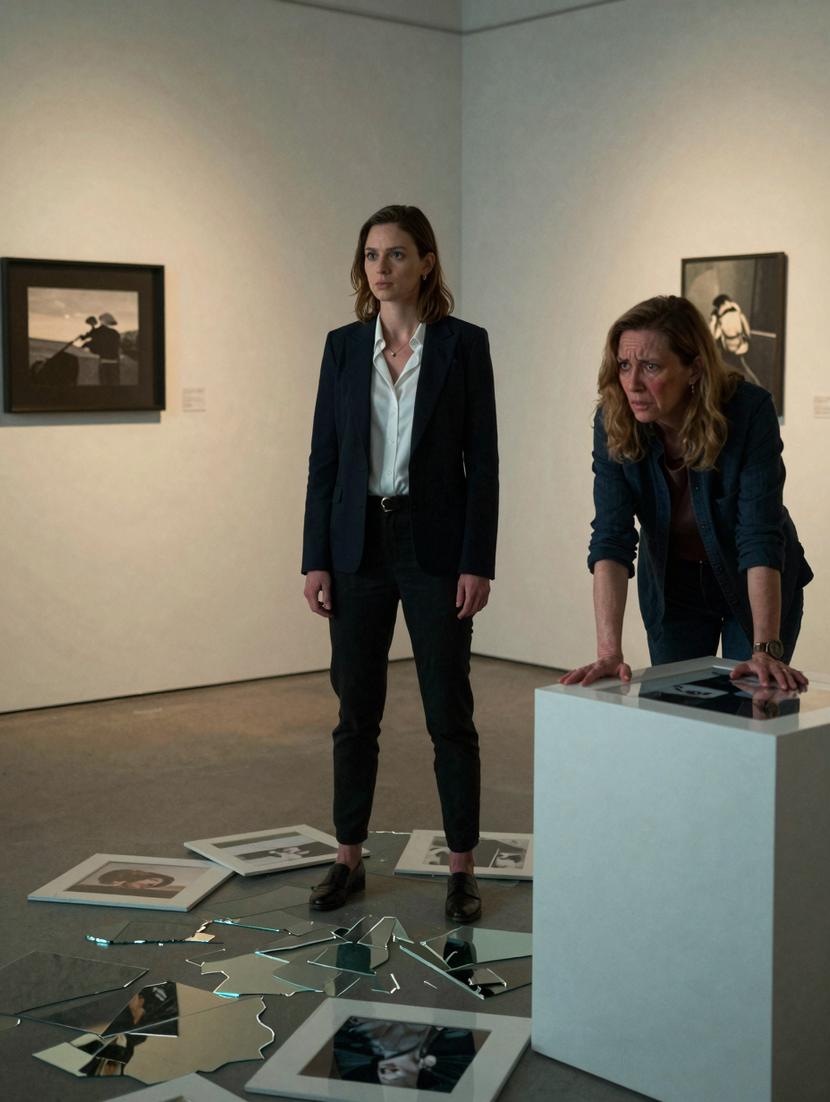
The shattering crash of glass sliced through the hushed gallery as my mother’s arm swept violently across the display table, sending my carefully framed photographs tumbling and smashing against the floor. Guests scattered like startled birds, hearts pounding in the sudden chaos, leaving only the heavy sound of my mother’s ragged breaths and my father’s rigid, scathing stare behind. “You ungrateful wretch!” Mom hissed, fingernails digging into the table as her hands trembled with fury. “All we want is what’s right! Daniel needs that estate more than you ever did!”
I am Elena. Thirty-two years old. This night was supposed to be my triumph—my very first photographic exhibition, showcasing the enchanting beauty of our grandfather’s beloved Willow Marsh Estate through every trembling season. Instead, it had morphed into yet another battlefield of family bitterness, with my brother Daniel’s insatiable entitlement center stage.
‘That estate isn’t yours to just give away,’ I said softly, eyes meeting my father’s flushed, angry gaze. ‘Grandfather entrusted it to me for a reason.’
Dad’s face darkened with rage. “Daniel has a family!” he roared, stepping decisively through the shattered glass to close the gap between us. “Three kids who need room to grow, to breathe! What do you actually want with it? More of your ‘artistic nonsense’?”
Those so-called ‘nonsense’ photos were worth thousands each. Ironically, they never cared to notice the value—not just monetary, but sentimental and ecological. Daniel was always their golden boy: the sharp, ambitious businessman with the picture-perfect family. I was the rebellious artist, the one who defied their molds and failed expectations.
“Sign the papers,” Mom demanded, fishing a pristine folder from her designer handbag. “The transfer documents are ready. Just sign, and this nightmare ends.”
I thought of the other folder nestled in my messenger bag—the one containing the environmental assessment I’d commissioned three months ago. The assessment that would flip their world upside down.
“No,” I said with calm resolve. Their shocked faces said everything. “The Willow Marsh Estate stays with me. It’s what grandfather intended.”
Before I could even blink, Mom’s hand shot out, toppling a display stand. More glass shattered—more fragile memories broken. Each photograph had been painstaking, captured over months of waiting for perfect light, weather, and quiet moments. A year of devotion razed within minutes.
“Your grandfather couldn’t have foreseen what Daniel’s become,” my father growled, voice low and venomous. “He’s built a real estate empire! He could develop that land, give it some real value instead of leaving it to rot!”
Rot. That was their word for the estate—because they never set foot there. Never saw the thriving wildlife sanctuary I had nurtured on its northern shore, or the summer artist retreats I organized. They never noticed that Daniel’s empire thrived on quick profits and ruthless corners cut.
“Daniel hasn’t been on the estate since grandfather passed,” I pointed out, carefully navigating the shards of glass as I picked up damaged photos. “He only cares about turning it into condos.”
“Development is progress!” Mom snapped, tone sharp as shattered glass. “Your artistic dreams are just childish nonsense. When will you grow up and do something worthwhile?”
I almost laughed, filled with bitter irony. They had no clue about the endangered species nesting there, the protected wetlands, or the environmental protection order on the verge of being finalized tomorrow.
“I am doing something meaningful,” I said, holding up a cracked photo of a loon family bathing in the first golden light of dawn. “It’s just not the kind you understand.”
‘Enough!’ Dad slammed a palm against the wall, making the remaining photos tremble. ‘Sign tonight, or consider yourself cut out of this family! No more support, no ties, nothing!’
I looked at them—these were the people who’d spent years trying to twist me into their idea of success, cheering on Daniel’s ventures while dismissing my passions. Now, they’d cruelly ransacked my work because I wouldn’t bow.
“The choice is yours,” I replied quietly, hoisting my messenger bag. “But my answer is no.” Pausing by the door, I added, “I have a meeting with the State Conservation Review Council tomorrow morning. I’d better rest.”
Confusion flickered across their faces. “Conservation Council?” Mom’s voice cracked with the first hint of uncertainty. ‘What do you mean?’
I stepped over the wreckage and toward freedom. “You’ll find out soon enough. Tell Daniel—he should probably come.”
Their shouts faded behind me. Years of underestimating me, branding my passion fleeting, my dedication frivolous. Tomorrow, they would discover exactly what I’d been doing with what they called an ’empty’ estate. Tomorrow, they would understand why grandfather entrusted this legacy to me. And I had the proof—every radiant, priceless shot.
—
The following morning, the grand meeting room at the State Conservation Review Council was already abuzz. I spotted Daniel, his tailored suit perfectly pressed, huddled with his development team, scouring property maps that were about to become worthless relics. My parents sat nearby, eyes cold daggers aimed at me.
I settled quietly, setting my laptop and a fat folder of meticulously preserved evidence on the table. Hours after fleeing the gallery, I had painstakingly recovered each file from backups—not for an exhibition, but this battleground.
“This is absurd,” Daniel muttered loud enough to catch my ear. “Some birds and plants can’t bulldoze progress. Our investors are ready.”
The council members entered, led by Director Claire Bennett, a formidable woman I had worked alongside for months. She had poured over my wetland ecosystem documentation with unwavering interest.
“Good morning,” Director Bennett started. “Today, we evaluate the Willow Marsh Estate and its fate concerning potential development.”
Daniel’s smirk slowly faded as I rose and connected my laptop to the projector. The first image blazed across the screen: a pair of endangered sandhill cranes nesting amidst the protected marshes.
“As you see,” I began, voice steady even as my heart pounded, “this property cradles critical habitat for several protected species. The past year, I have documented their presence, behaviors, and fragile coexistence.”
Images of rare orchids bursting from wetlands, threatened fish darting through clear streams, and a family of otters nestled against the shore illuminated the room. Dates, GPS coordinates, and scientific notes accompanied each frame.
“That’s nonsense!” Dad blurted, rising in defensiveness. “Those could be any place! Elena’s always spun fantasies!”
Director Bennett arched an eyebrow. “Actually, Mr. Harrison, independent state scientists have verified all findings. Your daughter’s documentation exemplifies thorough, invaluable research.”
I pressed on, revealing the estate’s vital role as a wildlife corridor linking two nature preserves. Daniel’s development plans would shatter this delicate balance.
“Furthermore,” I added, unfolding grandfather’s original property deeds, “the land was expressly designated for conservation in my grandfather’s will.” I laid detailed notes on the estate’s ecological value on the table.
Daniel stood abruptly, voice rising. “The will gave her the property—no strings attached!’
I smiled, sliding the documents toward Director Bennett. “Actually, there were clear intentions. Grandfather knew exactly what he was protecting—he trusted me because I understood its true worth.”
Mom’s complexion had drained entirely, realization dawning. Their pressure, threats, and plans dissolved into irrelevance.
“Based on these findings,” Director Bennett declared, “and under state environmental laws, the Willow Marsh Estate is hereby designated a protected wildlife sanctuary. No development shall proceed.”
The room exploded. Daniel’s team scrambled papers. Dad sought higher authority with heated words. Mom sat frozen, eyes locked on me, disbelief writ plain.
“You schemed this!” Daniel spat, stalking to my side. “You’ve destroyed everything! Do you know the money I’ve already sunk?”
I met his glare with quiet strength. “Maybe if you’d cared to visit in the last five years, you’d have seen what’s truly here.”
“This is not over!” Dad growled. “We’ll appeal! Commission another assessment!”
“You can try,” I said, collecting my things. “But every survey will find the same truth. This estate isn’t just land for profit. It’s a sanctuary. Just like grandfather intended.”
Director Bennett stepped forward, paper in hand. “Miss Harrison, we’d like to explore establishing a permanent research station here. Your work has been invaluable.”
I caught my mother flinch slightly at the professional respect in Claire’s tone. Years of dismissing my art as trivial faded beside this honor.
“Of course,” I said, smiling. “I’d gladly guide you to the best observation sites.”
As I left the chamber, Daniel’s enraged voice trailed, “This is your fault! If Dad hadn’t spoiled you…”
I smiled inwardly. They still missed the point. This wasn’t a grudge match. It was about guarding something irreplaceable, exactly as grandfather entrusted. The estate would endure—as a haven for wild beauty and hope. And my photography? It had proven its profound worth.
—
Six months later, I stood on the Willow Marsh Estate deck, watching through my lens as a pair of sandhill cranes taught their chicks to forage beneath the soft morning mist. The camera’s subtle clicks echoed the peaceful harmony that had blossomed here.
The sanctuary’s transformation exceeded my wildest hopes: research teams flowed in from universities, graduate students launched studies, and my wildlife photographs had caught the eye of National Geographic itself.
“Miss Harrison!” a young researcher called eagerly. “That rare orchid you documented last year—we’re seeing it spread!’
I smiled, remembering how my family once dismissed this place as ‘wasted.’ Now it thrived—not just with life, but with purpose.
My phone buzzed. A message from Laura, Daniel’s wife. “The kids miss the estate. Would it be okay if they visited this weekend? Just us, no Daniel.”
Our family ties had shifted since the council ruling. Daniel hadn’t spoken to me since his dreams crumbled, but Laura had reached out, confessing her own love for the estate’s wild embrace. Her children shared my wonder for nature.
“Absolutely,” I replied. “The baby otters are exploring their new territory. Bring their cameras.”
My parents had taken longer to accept the new reality. Last month, Mom pulled up unexpectedly in her sleek Mercedes—out of place among the dusty research trucks.
“I just don’t get you,” she said quietly, watching me photograph a rare butterfly. “You could have made millions from developing.”
I lifted my camera, showing her the delicate wings through the lens. “This butterfly exists on just a few spots on Earth. What’s money compared to that?”
She was silent for a long moment, really seeing for the first time. “It’s beautiful,” she admitted with a soft exhale. “I remember grandfather talking about these things.”
“I know,” I whispered. “That’s why he trusted me to protect them.”
Now, as I reviewed shots taken this morning, a familiar car rumbled onto the gravel driveway—Dad’s BMW. He stepped out, dressed less like a businessman, more like a visitor.
‘Elena,’ he said slowly, stepping toward me. ‘Mom mentioned you have a presentation today?’
I nodded, surprised. ‘It’s the sanctuary’s first educational day for local students. We’re teaching them about conservation and wildlife photography.’
He glanced around, uneasy amidst the cameras and field guides. ‘Evan—Daniel’s youngest—he can’t stop talking about the photos you taught him to take. Says he wants to be a wildlife photographer someday.’
“He’s got a keen eye,” I said, remembering Evan’s excitement capturing a heron’s delicate flight. ‘Want to see what we’ve been working on?’
Dad hesitated. Then nodded. I led him to the research station nestled in the old boathouse, now walls lined with my photographs annotated with scientific insights and conservation facts.
“You did all this?” he breathed, studying a sequence showing a rare frog’s life cycle.
“This is what I’ve been doing while you thought I wasted my time,” I said softly. ‘This is what grandfather saw when he looked at this land.’
He was quiet, tracing his eyes over the photographs. Finally, with effort, he said, ‘I was wrong. About this place. About you. Grandfather would be proud.’
Those words fell like the soft morning mist across the lake—gentle, cleansing, full of new beginnings.
‘Would you like to stay for the presentation?’ I asked. ‘The kids would love to glimpse their grandfather’s legacy.’
He smiled, genuinely, for the first time in years.
That afternoon, watching Dad help Evan adjust his camera to capture deer grazing at the forest’s edge, I realized how much had changed. The Willow Marsh Estate hadn’t just saved wildlife—it had quietly started healing our fractured family. Daniel still refused to come, pride sealing his distance, but his children came often, learning to view the world through lenses of wonder, not profit.
Mom had started a garden of native flowering plants, though she’d never admit how much she enjoyed the butterflies it attracted. Dad was slowly discovering success could be measured in ways beyond bank balances.
As the sun dipped beneath the horizon, painting the sky in hues no development could replicate, I took one last photograph. It captured my father with his grandchildren, crouched in the tall grasses, cameras poised, quietly witnessing the natural miracles around them.
It wasn’t the future anyone had planned. But it was better—richer, deeper, full of promise. The Willow Marsh Estate had become everything grandfather envisioned: not just a sanctuary for wildlife, but a sacred place where hearts and eyes could open wide. Sometimes, I knew, the most precious treasures couldn’t be bought or sold—they had to be protected, preserved, and shared by those who dared to see.