
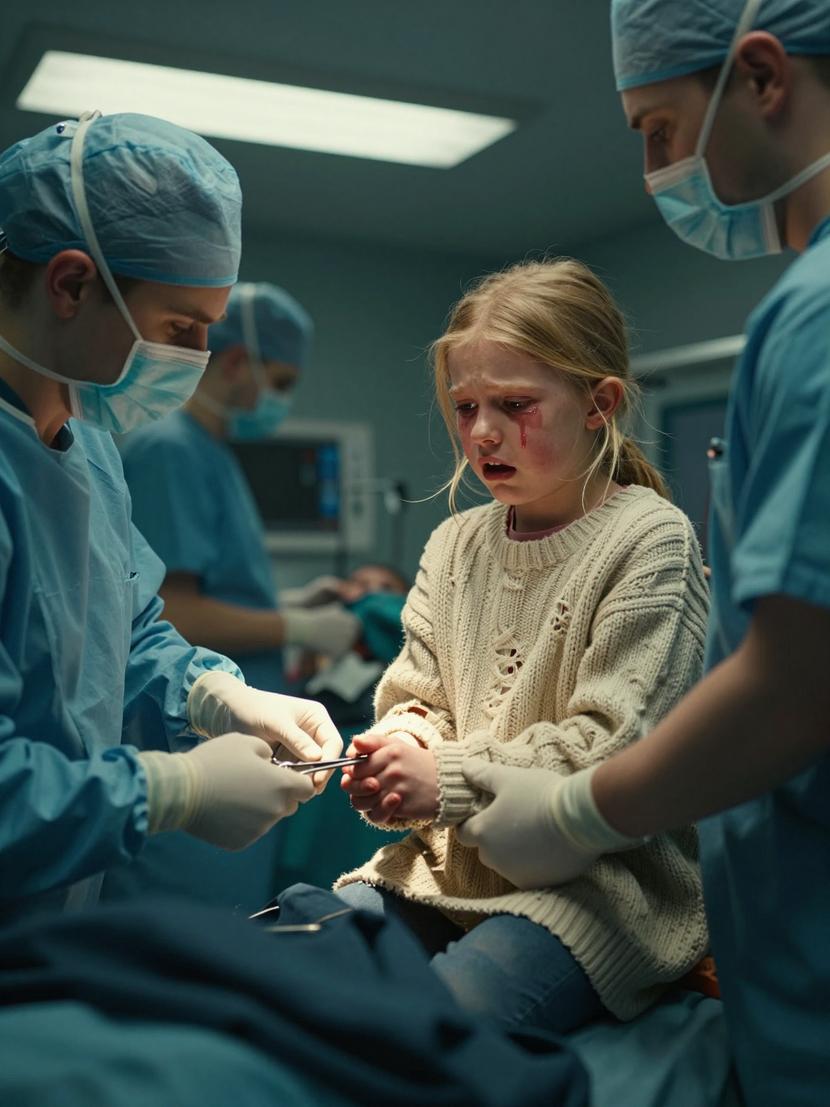
There’s a unique, haunting smell that clings to the trauma bay when disaster crashes through the doors—the metallic tang of blood mixing with the sterile sting of antiseptic, layered over the acrid scent of burned rubber and the bitter chill of a winter storm’s icy breath.
I am Dr. Laura, an attending trauma surgeon at a Level 1 trauma center in Chicago. For twelve relentless years, I’ve faced the grotesque aftermath of twisted metal and shattered glass. I believed I was invulnerable to the horror, that my heart was armored against any pain. That night, I learned how fragile that armor really was.
It was a bone-numbing Tuesday in late January. Outside, temperatures plunged to a merciless negative ten degrees. A sudden flash freeze had transformed Highway 72 into a treacherous sheet of black ice, and for an hour, the emergency radio had been a relentless chorus of panic. Twenty-five vehicles had collided in a devastating pile-up along the highway.
The ambulance bay’s double doors slammed open, letting in a blast of freezing wind that twisted through the corridors. Paramedics’ hurried commands collided with sirens and the screech of wheels on linoleum.
‘Trauma One! Move! We need a central line kit, stat!’ a paramedic yelled, his breath steaming in the cold as he shoved a stretcher that threatened to skid out of control.
I sprinted to the head of the stretcher, snapping on gloves, my team—a swarm of nurses and residents—rushing in perfect synch.
Lying on the stretcher was a little girl, no more than seven. Blonde hair plastered against a pale, nearly translucent face lit by harsh fluorescent lights. What grabbed me wasn’t her fragile frame—it was the massive, heavy cable-knit sweater engulfing her small body. It was soaked, torn, stained with slush and debris from the crushed vehicle—too large, like an adult’s shroud drowning her tiny shoulders.
‘Talk to me,’ I urged gently, shining my penlight into her eyes. They fluttered sluggishly but showed faint signs of life.
‘Female, about seven,’ the paramedic rattled off breathlessly. ‘Pulled from the backseat of a sedan crushed between two semis. Parents in front seat—didn’t survive. She was trapped forty minutes in freezing cold. Blood pressure dropping, heart rate through the roof. Suspected severe internal bleeding, hypothermia.’
A cold knot formed in my chest, but I pushed it down. In trauma, the ‘golden hour’ is ruthless—sixty minutes between life and death. First commandment? Expose the patient. You can’t fix what you can’t see.
‘On three, let’s transfer her. One, two, three!’
We shifted her frail body onto the trauma table. A feeble whimper escaped her lips.
‘Sweetheart, you’re safe now. I’m Dr. Laura. We’re here to help you, but you have to stay still,’ I said, my voice carving through the numb fog enveloping her.
I grabbed my trauma shears—thick, sharp blades designed to rip through winter armor and chaos alike.
‘Let’s expose,’ I commanded.
As I slid the scissor blade beneath the ruined collar near her collarbone, her eyes snapped open—wide, wild, swimming with raw terror unlike anything I’d ever seen in a child.
Before the scissors even moved, her tiny, ice-cold hands lunged, gripping my wrist with fierce strength.
‘No!’ she screamed, voice raw and desperate, cutting through the stunned silence. ‘Don’t cut it!’
Dr. Cooper stepped forward, puzzled. ‘Sweetheart, we have to. That sweater’s soaked, freezing. We need to see your belly to know if you’re hurt.’
‘No!’ she screamed, twisting and kicking, crossing her arms over the sweater, clutching it desperately to her chest. ‘You can’t take it! You can’t!’
‘Hold her shoulders—gentle,’ I instructed the nurses, trying to stay calm while adrenaline surged. Her heart monitor’s frantic beeping grew louder. Every second she resisted meant bleeding unchecked.
‘Honey,’ I leaned closer, eyes locked on hers. ‘I’m sorry, but I have to cut this. You’re badly hurt. If I don’t, you won’t survive. Do you understand? I have to.’
I repositioned the scissors near the hem, ready to cut upward.
Suddenly, she sobbed—a heartbreaking cry that shook her tiny frame. ‘Please, please,’ she begged, tears carving dirty tracks down bruised cheeks. ‘If you cut it, he’ll die. Please, don’t kill him. I promised Mommy I’d keep him safe.’
I froze.
The shears hovered, tension suffocating the room. The only sounds: her racing heart, the howling wind outside.
Those words—’If you cut it, he’ll die’—sent a chill deeper than the winter air. This was no child’s fear of doctors; it was the fierce protection of a guardian.
I glanced down at the bulky sweater she clutched—the garment bulging oddly over her small frame.
I dropped the scissors with a clang onto the metal tray.
‘Everyone stay still,’ I whispered. Slowly, I raised my empty hands toward Sophie.
‘Okay,’ I said softly, voice trembling. ‘I won’t cut it. But I need to see inside.’
Her tear-filled eyes searched mine, shivering violently. After an agonizing moment, her hands slowly uncrossed. With trembling fingers, she peeled back the thick wool.
Peering inside, my breath stalled, knees weak.
Cradled against Sophie’s bare chest was something miraculous—impossible amid the carnage.
A fragile infant’s face, nestled like a secret in that worn sweater.
Lucas. No more than weeks old, curled tightly in a desperate ball, shielded by his sister’s body heat and the heavy wool of their father’s sweater.
He wasn’t crying. His lips were a terrifying dusky blue; his breath shallow and frantic. Severe hypothermia, but alive.
The trauma bay hung in disbelief. My team silent, eyes wide.
‘Oh God,’ Dr. Cooper whispered, stepping back.
‘Call NICU and the neonatal team—NOW! Severe pediatric hypothermia, infant, unknown age,’ I commanded. The bay erupted into organized chaos.
I looked to Sophie, who stared up at me, fear melting into exhaustion.
‘I kept him warm,’ she whispered. ‘Mommy said… keep Lucas warm.’
My throat tightened. Twelve years in trauma, and never had I witnessed such a selfless act of survival.
This little girl had endured forty freezing minutes trapped in a crumpled sedan amid death and destruction. She had shed her own coat, donned her father’s giant sweater, and pressed her newborn brother against her bare skin—their shared warmth their lifeline.
‘You did perfectly, sweetheart,’ I said, voice breaking. ‘You’re a hero. But I need to take him now so others can help keep him warm. Can you do that?’
Her eyes searched mine before slowly releasing the wool’s hold.
‘Okay,’ she breathed.
‘Warm blankets, now!’ I ordered Dr. Cooper.
Carefully, I lifted the baby, ice-cold as marble, from his shelter. The infant let out a fragile, raspy cry—the sweetest sound that night.
The neonatal team arrived instantly, enveloped Lucas in heated blankets and whisked him away.
Turning back to Sophie, I finally cut through the sweater’s soaked fabric, revealing her pale, mottled skin.
My breath caught again.
A bruised, dark purple seatbelt mark stretched harshly across her small abdomen—the deadly imprint of sudden, violent impact.
Her belly was rigid, locked in a protective spasm over massive internal bleeding.
‘Blood pressure dropping! Heart rate spiking! She’s crashing!’ Dr. Cooper shouted.
We fought desperately as her fragile body slipped toward death—blood flooding her abdomen, cold stealing her strength.
No time for scans. We raced to OR 3.
The clock ticked as we worked—blood pooling, heart faltering. I plunged into the haemorrahgic abyss of her abdomen, blindly hunting the source.
The shattered spleen was a sodden ruin, artery ripped open.
Fingers clamping the bleeding vessel, rushing for clamps, packing gauze into the abyss. The OR roared, tension ripping the air.
Slowly, stabilization came—faint but precious.
We performed damage control: spleen removed, abdomen left open with a temporary vacuum dressing, buying precious time.
Hours melted into days. I scrubbed off the grime, chased details of the crash, sought hope.
Officer Grant, soaked with snow, recounted the scene. The sedan sandwiched, parents lost instantly, Sophie wedged beneath the shattered glass, clutching her brother against the cold, ferocious wind.
‘She growled at me,’ he said, voice thick with emotion. ‘Like a wounded animal defending her baby.’
Sophie’s bravery whispered through every corner of the hospital.
Despite catastrophic trauma, her brain remained intact. But the ordeal dragged on.
When Sophie finally awoke, bound to the hospital bed, terror overran her—a prisoner to panic, thinking she’d failed Lucas.
I refused sedation to preserve consciousness, held her gaze, and summoned the magic of modern technology.
On FaceTime, Lucas’ peaceful, pink face flickered to life.
The transformation was instantaneous.
Her frantic grasp slackened; tears turned from fear to relief.
‘He’s okay, Sophie,’ I murmured. ‘You kept him safe.’
Over the next days, her strength wavered—but her heart held. With every glimpse of Lucas, her will to survive grew.
Three days later, ready for surgery to close her abdomen, disaster struck.
Necrotic bowel exposed—dead tissue breeding deadly infection.
As sepsis crashed her fragile body, the OR erupted into chaos.
Heart stopped. CPR thundered. Epinephrine, atropine, defibrillation—frantic resistance against the abyss.
Her fate balanced on a knife’s edge.
Driven by her sister’s promise to ‘keep Lucas warm,’ I battled the shadows, excising death, washing life into her ravaged body.
And slowly, the pulse returned.
Three hours later, her wound closed—silent victory over grim odds.
The following week was a vigil of hope and fear, antibiotics waging war as her body teetered on collapse.
Lucas thrived in the warm cocoon of NICU care. Each day, a photo taped by her bedside bridged sisterly love and survival.
Finally, after eight grueling days, sedation lifted. Sophie’s eyes fluttered open—slow, uncertain, but clear.
We removed the breathing tube. Her first breath of freedom was ragged but triumphant.
‘Is Lucas warm?’ she whispered.
Tears blurred my eyes. ‘Yes, Sophie. He’s warm. He’s safe. You saved him.’
Later, she whispered through trembling fragments of that horrific night—a crash, shattered glass, cold wind slicing through broken windows, parents gone, and a mother’s dying plea:
‘Emily, take care of Lucas. Keep him warm until help comes.’
Her resolve shattered my heart.
A month later, Sophie and Lucas left for their grandparents’ care in Wisconsin.
Before goodbye, I pressed a small, clean shard of dark red cable-knit wool—part of their father’s sweater—into Sophie’s hands.
‘Whenever you feel cold or afraid,’ I said softly, ‘hold this and remember your warmth, your bravery.’
She gripped it tight, leaned in, and hugged me—the fragile survivor, the fiercest guardian.
I am a trauma surgeon, battle-weary from relentless tragedy. But Sophie, a seven-year-old in an oversized sweater, reminded me: even in the blackest cold, the human spirit’s fire burns fiercely enough to save us all.