
I was still in uniform, the chill of the barracks seeping through the thin walls, when my father’s voice pierced the turmoil inside me. He told me bluntly that my leg wasn’t worth five thousand dollars. The doctor’s words echoed in my mind—disability. Not a warning, but a grim fact if I didn’t undergo surgery before the week was out. My phone trembled against my ear; my boot hung halfway unlaced, the swollen skin under my fatigues stretched so taut it seemed ready to burst.
On the other side of the line, my mother exhaled sighs heavy with disappointment. My sister’s laugh rang out—a light, careless sound that felt like a cruel dismissal. And my father, with a calmness that masked an icy refusal, said, “Sweetheart, we just bought a boat. Now isn’t the right time.”
In that moment, something within me snapped into silence.
I was stationed miles away—two hours from home—when the injury struck. It was supposed to be routine: movement under load, steady and controlled. I remember the unnatural sound first, a sickening, wet pop that didn’t belong in a living body. The searing heat along my leg came next, followed by the earth rushing upward too swiftly.
Pain in the service is no stranger. You learn quickly to distinguish between the ache of effort and signals of true harm. But this pain—but this—was deafening. It stole breath, reducing everything to a deafening hum inside my skull. I tried to stand, but my leg folded beneath me like it was no longer mine. A medic knelt beside me, eyes sharp and unyielding. “Don’t move,” he said, voice firm enough to stop time.
At the clinic, harsh fluorescent lights buzzed overhead as I lay sprawled on a narrow bed, my uniform hastily cut below the knee. My leg swelled by the minute—skin gleaming and taut, mottled shades of purple, yellow, and a bruised, undefined darkness creeping beneath.
The Physician’s Assistant didn’t soften the truth. ‘Significant ligament damage,’ she said, tapping the glowing MRI screen. ‘Possibly worse.’
“How soon?” My voice was barely a whisper.
She hesitated, the beat heavy with unspoken urgency. “This week. Delay and you’re looking at permanent impairment. Limited mobility. Maybe a lifetime of limping.”
I nodded as if I’d been told the weather. The surgery itself wasn’t the hurdle. It was the approval—the endless shuffle of forms, the wait for signatures from faceless bureaucrats who held my fate in their pens. The earliest date they could offer was weeks away. Weeks I simply didn’t have.
Lowering her voice, the PA suggested cautiously, “If you can arrange it off-base, you should.”
“How much?” I pressed.
Five thousand. That number glared from the scrap of paper she slid across the metal tray. Five thousand dollars just to buy a chance at walking again.
That night, the barracks thrummed with life—laughter, music, a shouted challenge over a video game—but I sat on my bunk, leg wrapped in thick gauze, boot abandoned beside me like a shell I’d outgrown. My thumb hovered over my phone screen before I finally dialed home.
Dad answered with forced cheer, metallic clinks echoing faintly behind him — tools or TV, I couldn’t tell. “Hey, kiddo,” he said.
“Dad… I got hurt. It’s serious.” My voice sounded steadier than I felt.
I laid it out—injury, urgent surgery, cost. I promised to pay it back. Just needed help now.
Silence stretched. Then the familiar sigh before refusal. ‘We just bought the boat,’ he said flatly. ‘This timing’s bad.’
‘It’s my leg,’ I pleaded. ‘Without this surgery, I might never walk properly again.’
“Well,” he said with a dismissive shrug in his voice, “you’re young. You’ll adapt.’
Mom took the extension phone, as she always did when things went south. “Honey,” her voice soft but steely, “maybe this is a lesson. You chose this path, the risks. A limp will teach responsibility.” She spoke as though this were a minor inconvenience.
My sister’s sharp, mocking laugh cut through. “Relax. You always manage, right? You’re the tough one.”
I gazed at my leg, blood darkening the gauze, staining innocence into something raw and undeniable. The doctor’s word—permanent—loomed heavy.
“I understand,” I whispered.
I hung up without tears or argument, sinking into the noise of the barracks with a cold, clear resolve settling deep inside.
Two days later, I found myself nursing my leg in a cramped apartment far from base. Crutches under my arms, each shuffling step was a reminder of the stakes. Painkillers dulled the sharp edges but not the gnawing fear. I ran through budgets in my mind—credit cards, payday loans, anything to buy time.
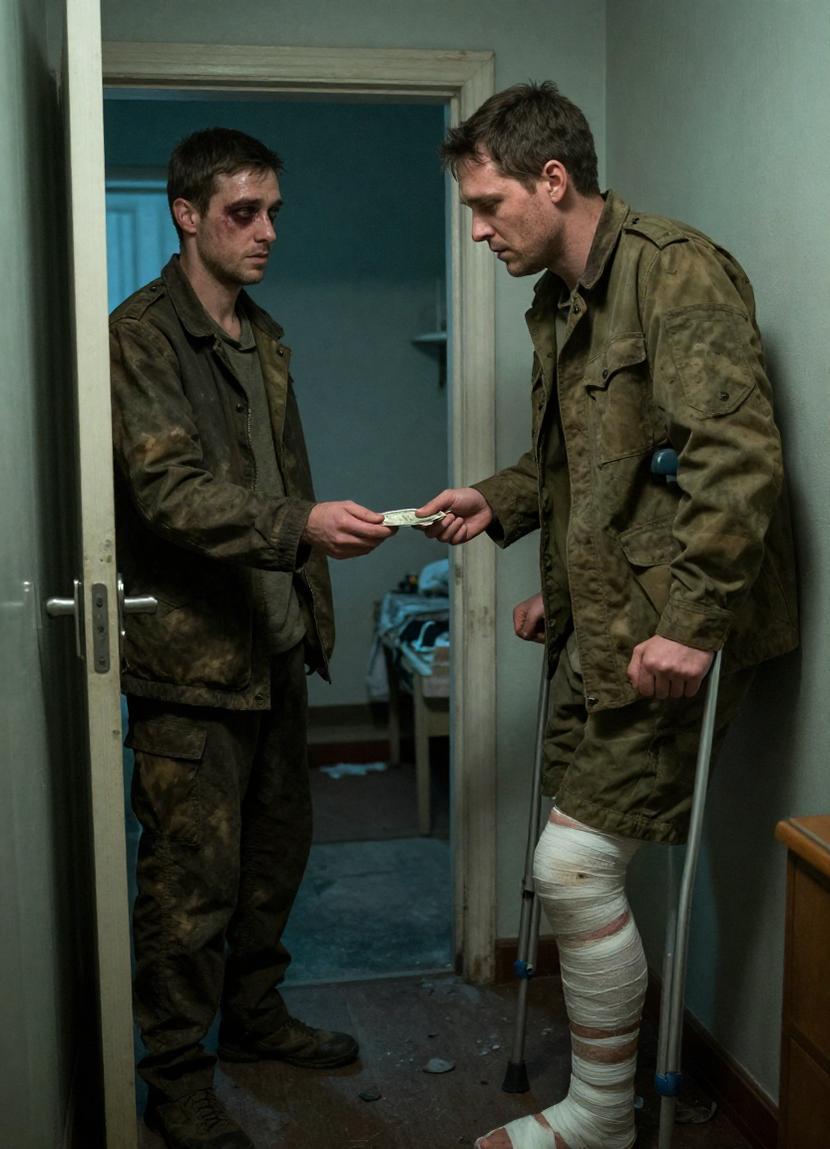
A sharp knock startled me. I opened the door to find my brother, his jacket stained with grease and exhaustion, dark shadows under his eyes from endless hours in a mechanic’s shop. His hands bore scars of tire changes and broken bolts.
He looked at my leg, cursed softly, and without hesitation, pulled out a crumpled stack of bills—tens and twenties, worn and wrinkled. Pressing them into my palm, he said, “Eight hundred. I sold all my tools.”
“You need those,” I protested.
“I need you walking,” he replied. “I’ll figure the rest out.”
My parents had assets, equity, and a boat named after a vacation spot they barely visited. My brother had tough hands and empty pockets, yet he gave me everything he had. I accepted that money—not because it was enough, it was far from it, but because I needed to remember who truly stood by me when I was bleeding.
Before he left, he squeezed my shoulder. “You’ll be okay,” he promised. “You always are.”
He didn’t know what storms lay ahead. But I did.
That night, sleep evaded me. Not the pain—though it pulsed relentlessly—but the ghosts of forgotten family roles roared loudest. Growing up, the labels were clear: my sister was the “Investment,” the cherished project with a padded safety net. My parents openly celebrated her potential, cushioning every failure with cash and reassurances. I was the “Reliable One”: the silent fixer, the problem solver who never asked for help.
When my sister’s boutique crashed under a $15,000 loss, my father wrote blank checks without a wink. When the wellness studio floundered, they refinanced the house again, proud as if quoting scripture.
And me? When my car broke down at twenty-two, I asked for a simple loan. They gave it—on their terms. A formal contract with interest, notarized. For six months, I ate canned food, walked miles, worked extra shifts—believing responsibility might earn me respect. It didn’t. Just a silent expectation to endure.
Now, with my leg propped high on pillows, watching the world pulse outside my window, the cycle finally made sense. It was never about money. They had it, just not for me.
Calling the military hospital the next morning brought no change. Approval still pending. Timelines still stretched. Time had run out.
Desperation painted my thoughts—payday lenders, brutal interest rates, predatory promises. Still, I went.
The office smelled of stale coffee and broken hopes. The man recited terms in a mechanical drone as his computer calculated my financial surrender. Interest obscene. Repayment merciless. “Do you understand?” he asked.
“Yes,” I whispered, and signed my future away.
Two days later, surgery.
Laid on the gurney, eyeing the sterile ceiling tiles, counting cracks like a secret code, the anesthesiologist’s voice faded as I drifted. My father’s phrase echoed: “We just bought the boat.”
Waking, my leg encased in bandages and metal, pain was sharp but measured—as if something was finally mended.
The surgeon’s words were a balm. “We got it in time. Follow rehab, and you’ll recover fully.” Relief almost crushed me.
But recovery came with no mercy from my finances. My first loan payment loomed three days away. My bank account held forty-seven dollars and some change; payday drifted a week off.
I danced through impossible calculations, desperate for a miracle. Plasma selling? Furniture? Choices that tasted bitter.
Then, tucked in a jacket pocket, a scratch lottery ticket—bought on a whim at the pharmacy—offered a spark. Checking the numbers, disbelief settled over me—not a jackpot, but enough. Enough to breathe, to hope, to stall despair.
I told no one.
Instead, I sought a lawyer. Not one with flashy ads, but a sharp mind in a downtown glass tower. Arriving on crutches, battered but determined, I laid out my demands: protect my assets, and uncover my parents’ true financial story.
He paused. ‘The second part changes everything, doesn’t it?’
“Yes,’ I said. ‘That’s why I’m here.’
The truth shattered myths: their “nest egg” home was drowning in debt, underwater with refinancing and back payments. The boat wasn’t theirs—not really. The businesses were bleeding cash, propped by shaky equity. Taxes tangled in a web even the lawyer found grim.
“They’re not wealthy,” he said. “They’re pretending.”
I stared, swallowed the sting of betrayal. They refused me $5,000 to save my leg, yet poured tens of thousands to mask reality.
‘Can we shield you from their collapse?’ he asked.
“No,” I said firmly. “I won’t run. I’ll own it.”
A plan took shape.
A company was quietly formed—anonymous, clean—no ties to family. Through it, I bought my parents’ debt. Banks love clean sheets and will trade bad loans for fresh capital.
Within two days, the daughter they dismissed became the entity that owned their fragile empire.
They didn’t know. It was my secret weapon.
An intermediary, polished and British-accented, reached out to them. My parents trusted accents over instincts. A meeting was set in the posh lunch club my father loved—status and power wrapped in wood paneling and crystal glasses.
I wasn’t there. But I listened later to recordings.
The pitch was smooth: distressed assets turned opportunity. A sale-leaseback offering relief, no foreclosure, maintained lifestyle. My father’s pride bloomed through the phone; my mother asked wary questions but only about appearances; my sister dreamed of expansion.
They signed a fifty-page contract thick with legal traps. Hidden in the fine print, a lethal clause: one late payment, one breach, and eviction was immediate—no grace, no court battles.
They didn’t read it.
I felt no triumph. Only resolution.
That night, I stood unaided for the first time since the injury, legs steady, no limp.
I smiled—not because I had won—but because I could finally stand on my own terms.
They still saw me as the daughter who’d just ‘figure it out,’ utterly unaware of the storm beneath.
I moved with purpose now—quiet, deliberate—a lesson drilled into me by the military: noise attracts too much attention, and I needed silence.
Outwardly, life appeared unchanged. My parents spun tales of “strategic restructuring” at dinners. My sister flaunted glossy photos to friends. They wore relief like a suit, blissfully unaware they were mere tenants.
I rebuilt myself.
Physical therapy became sanctuary. The scent of disinfectant and worn rubber mats grounded me. My therapist’s calm voice reminded me: “Your body is not your enemy.” I strove to believe it.
Meanwhile, the lawyer unpacked the story behind the money, numbers ceasing to intimidate, becoming tools of clarity.
Weeks passed before my father called—tentative, rehearsed. “Hey, just checking in…” I replied coolly, “Recovering.” Conversation faltered, hurriedly ended.
I marked the date. People like him fear losing their mirrors.
Monthly compliance reports came to my parents—ignored, skimmed, underestimated the cost of careless.
Thanksgiving arrived—their stage for perfection. My sister bragged of investments, my father carved the turkey with practiced authority, glancing at me as if recovery was owed. My sister toasted “partners who see value, not just numbers,” laughing as if blind to the truth beneath.
Three weeks later, an overdue payment triggered the clause.
By midnight, lease terminated. By morning, eviction notices posted.
I scheduled the meeting.
They arrived late, irritated, demanding superiority over junior staff. I was already seated—calm, collected.
Recognition flickered then collapsed in their faces. My sister paled, my mother whitened, my father gaped.
“Hello,” I said softly. “Mom. Dad. I’m the owner now.”
Rage exploded. “This is a joke!”
“No,” I said. “It’s a contract.”
I revealed every detail—the debt buyout, missed payment, ironclad clause.
My mother sobbed, raw and pleading. “You tricked us.”
“You signed,” I replied.
Security hushed the rising storm.
Outside, cold air welcomed me as I breathed steady, unequally weighted no more.
I called my brother. “Pack your things. I bought the shop.”
Disbelief, then laughter through tears.
We weren’t seeking revenge—we were seizing resolution.
The fallout unfolded with quiet inevitability. My parents barred from their home, locks changed, notices taped with sterile finality.
My mother’s remorseful voicemail begged for understanding. No apology. My father’s furious calls threatened lawsuits and whispered of secreted fortunes.
I listened silently.
“I know,” I said quietly. “That’s why I filed the report.”
Line dead.
My sister came once, makeup perfect, tears just enough to feign sympathy. Knocked like old times, soft and persistent.
“You didn’t have to do this. We could’ve worked it out.”
I pressed my forehead to the door.
“You always take things too far,” she scolded.
I laughed coldly. “Like refusing $5,000 for surgery?”
She left, heels clicking in frustration, phone already dialing the cavalry.
Alone, I walked—no crutches, no brace—just legs strong beneath me, carrying the weight of every choice made and lesson learned.
I thought of the girl who’d signed away her future with trembling hands; the brother whose name now had pride on the shop door.
Family wasn’t blood. It was who refused to let you bleed alone.
Word leaked out. Whispered rumors, worried questions. My parents fought to control the tale, but truth’s weight crushed their narrative.
I felt no triumph, only a clear, cold peace. They’d undone themselves; I simply stopped catching the fall.
One afternoon, stepping into sunlight, my therapist called after me, “You walk like someone who trusts herself again.”
“I do,” I said.
The house stayed empty—quiet as dust after a storm. My parents vanished from their routines, their memberships canceled, their social circle evaporating in fearful silence.
I healed—inside and out. Returned to duty steady, trusted.
Closing the shop one night, my brother told me, “Mom and Dad came by. Didn’t come in—just watched from across the street.”
I pictured them standing there, rigid and lost in a place they never understood.
“Didn’t ask what they wanted?”
He shook his head. “I told them this place isn’t theirs anymore. Said they should leave.”
“You didn’t have to do that.”
“Yes, I did.”
Weeks later, a formal notice arrived. Charges moved forward. Timelines set.
My mother’s last letter begged for forgiveness, for understanding.
I folded it away. I understood perfectly. They chose comfort over compassion, appearances over love. Understanding demanded no reconciliation.
That night, on my balcony, I stretched my leg, solid beneath me.
The girl who thought love was earned by silence was gone. In her place stood self-respect—quiet, steady, unyielding.
The final meeting was a quiet affair. No theatrics, no unity—two fractured people facing the consequences.
My father’s voice was hoarse. “You didn’t have to ruin us.”
I met his gaze. “I didn’t ruin you. I stopped saving you.”
He flinched, struck not by me, but by truth.
Outside, fall deepened, leaves crunching underfoot.
I thought back to that night—bleeding, rejected, alone—and to the eight hundred dollars in my brother’s hands.
And I knew, without doubt, I’d traveled exactly the right distance.