
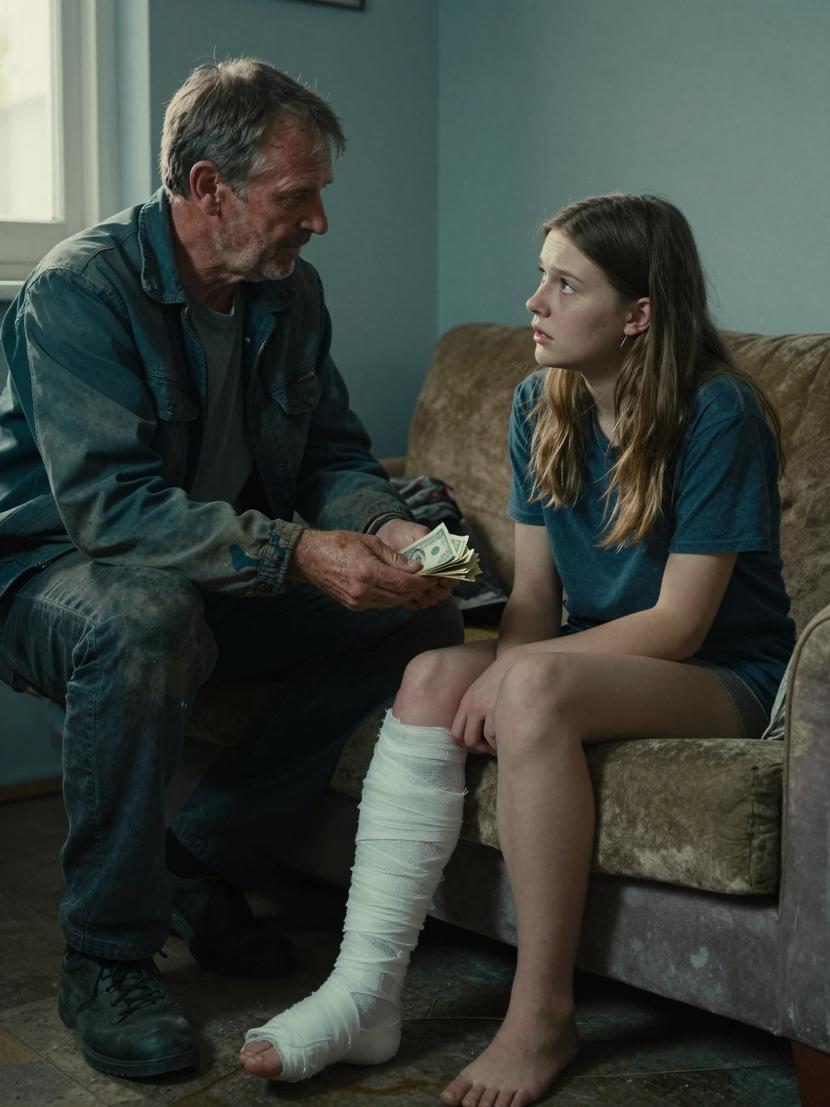
I was still in uniform, the harsh afternoon light flickering across the faded walls of Cedar Barracks, when my father’s voice cut through the phone line like ice. “Your leg isn’t worth five thousand dollars,” he said. The words felt heavier than the swollen fabric of my fatigues straining against my battered knee. Just moments earlier, the Nurse Practitioner at Willow Clinic had uttered a word I couldn’t ignore—disability. Not a threat, but a looming reality, unless I had surgery within the week.
The sound of my own breathing filled my ear; my boot was half-unlaced, a silent testament to the pain that blazed through me. On the other end of the line, the sigh of my mother was weary, resigned. My older sister’s laugh—a bright, careless thing—rang out almost mockingly. Then my father spoke with a calmness that stung. “Sweetheart, we just bought a boat. This isn’t a good time.”
Something inside me snapped, retreating into an icy silence.
It had happened two hours from home, during what was supposed to be a routine training exercise at Cedar Barracks. Movement under load, steady pace. Nothing extraordinary. But then I heard it—a sharp, wet pop that shattered the stillness within my body. Heat followed, and then the cruel rush of the ground surging toward me too fast.
Pain in the military is old company. You learn to distinguish discomfort from true danger, but this was different. This was the kind of agony that rips your breath away, leaving nothing but a painful, relentless white noise. When I tried to stand, my leg betrayed me, collapsing like it belonged to someone else. My corpsman knelt quickly beside me, his eyes cold and focused. “Don’t move,” he ordered, sharp and urgent.
Later, under the harsh glare of fluorescent lights at Willow Clinic, I lay on a narrow bed, my uniform shredded at the knee, skin swelling into hues of purple and yellow I had no name for. The Nurse Practitioner didn’t soften the blow. “Significant ligament damage,” she said, tapping at the MRI on the screen in front of her. “You need surgery. Soon.”
“How soon?” My voice cracked.
She hesitated—a silence that screamed. “This week,’ she confirmed. ‘If you wait, permanent impairment is likely. Limited mobility. A lifelong limp.”
I nodded blankly, knowing the real obstacle wasn’t the injury—it was the approval process. The slow march of paperwork, signatures, and bureaucratic silence. Northgate Military Hospital couldn’t move fast enough; the earliest window was weeks away. Weeks I didn’t have.
Her voice dipped as she slid a scrap of paper across the tray. $5,000. The cost for a chance to keep walking as I once did.
That night at Cedar Barracks, with my leg swathed in thick gauze and my boot abandoned on the floor, laughter and music bubbled around me—life moving forward without me. I stared at my phone long enough to know what I had to do. Finally, I called home.
Father answered, his tone light and distracted, metallic clinks whispering in the background. “Hey, kiddo,” he said.
“Dad,” I swallowed the broken steadiness in my voice. “I’m hurt. It’s serious.” I laid it out: injury, surgery, timeline, cost. I promised to pay him back. I just needed help now.
Silence.
Then came the familiar exhale, the prelude to denial. “We just bought the boat,” he said, steady and unapologetic. “You know that. Poor timing.”
“It’s my leg,” I whispered, almost pleading. “If I don’t have surgery, I might never walk right.”
“Well,” he said, almost kindly, “you’re young. You’ll adapt.”
The phone clicked. The line shifted as my mother picked up. She always stepped in then, softening the blow with cold logic. “Honey,” she said, as if it were a minor inconvenience, “you chose this career. You chose the risks. A limp will teach you responsibility.”
Her words fell like stones.
Then my older sister’s laughter, light and hollow: “Relax. You’ve always figured things out. You’re the tough one.”
I looked down at my leg, blood seeping through the gauze, staining everything with brutal reality. The doctor’s word echoed: Permanent.
“I understand,” I said. And I did. I folded the silence into myself, hung up, and sat in the noise of Cedar Barracks feeling something settle cold and sharp inside.
Two days later, Maple Ridge Apartments became my reality—crutches and pain pills my constant companions. Every step a harsh reminder of what I was risking. I ran numbers in my head, calculating debts, payday loans, any lifeline. Then, a knock.
It was my older brother. Grease-stained jacket, dark circles under tired eyes, hands scarred from endless shifts at Ironworks Garage—his sanctuary and prison.
He looked at my swollen leg and cursed softly. “They didn’t help you,” he stated, not asked.
I shook my head.
Without warning, he pulled from his pocket a wad of crumpled bills—eight hundred dollars. “I sold all my tools,” he said simply. “Here. I’ll figure out the rest.”
My voice caught. “You need those.”
“I need you walking,” came the fierce reply.
My parents had assets, savings, a boat named after a vacation they barely remembered. My older brother had nothing but gave me everything. I accepted it—not because it was enough, but because it mattered.
As he left, his hand squeezed my shoulder. “You’ll be okay,” he said quietly. “You always are.”
He couldn’t know what storm was coming. But I did.
That night, sleep was a stranger. Not for the pain pulsating in measured throbs, but for the ghosts of old memories.
In my family, identity was assigned early. My older sister was “Investment”—the shining hope needing endless support, propped up through failed ventures and endless refinancing. I was the “Reliable One”—the silent pillar, the fixer, the daughter who never asked for more.
Early on, I watched as their mistakes vanished under checks and refinancing, while my own struggles were met with contracts and interest rates. At twenty-two, desperate to fix a broken car with a $2,000 loan, I signed away every cent with formalities and cold conditions. Their goodwill was transactional.
Now, as I balanced on crutches in my apartment, I understood: it had never really been about money. They had the means—they just didn’t have it for me.
I called Northgate Military Hospital again. The answer was unchanged. Approval pending. Weeks to wait. Time I didn’t have.
Desperation pushed me to QuickFund Advances. The scent of stale coffee and desperation filled the cramped office. The loan officer’s voice was practiced, his terms ruthless. Interest rates that devoured future paychecks. I signed anyway.
Two days later, surgery began. Lying on the gurney, counting ceiling tiles, the anesthetist’s quiet voice counting me down, my father’s words echoed: We just bought a boat.
I woke wrapped in bandages and metal frameworks, pain sharp but precise—a strange comfort. The orthopedic surgeon assured me we were in time. If I followed rehab, I’d recover.
Relief surged, but the financial storm loomed. The first loan payment hit before I could catch my breath. Forty-seven dollars in my account. Paycheck a week away.
I counted costs like ammunition—plasma selling, furniture for sale, silent compromises.
Then I found the lottery ticket—the thoughtless purchase at the pharmacy. Cracked open the app. Not a jackpot, but enough. Enough to breathe.
I kept silent, but reached out to counsel—a cold, calculating man whose office in Harbor Glass Tower smelled of power and patience. I told him I wanted two things: protection from ruin and control over my parents’ finances.
His eyes darkened. “That second part changes everything.”
I nodded.
Days later, he delivered the truth my parents hid:
The house was drowning in debt, payments overdue and buried. The boat was a sham—down payment on a credit card, the rest a loan based on dreams, not income. My sister’s ventures bled cash, patched only by mortgaging the house further.
“They’re not wealthy,” counsel said calmly. “They’re pretending.”
I stared at the reality behind the facade—refused five grand to save my leg while tens of thousands burned keeping appearances alive.
“Can we protect you?” he asked.
“No,” I said quietly. “I want to own it.”
And with that, the plan was born.
We moved fast. Created a company—Prospect. No names, no ties—just cold business. Through Prospect, I bought their debt for less than it was worth. Not for vengeance, but clarity.
In forty-eight hours, I became more than the daughter they dismissed. I was the entity that owned their home, their loans, their fragile empire.
They didn’t know. Couldn’t. Because if I revealed myself, their world—and their version of reality—would crumble immediately.
So, I stayed hidden. Prospect came with a polished voice—British accent, professional. They trusted that more than their own gut.
At the Crown Oak Club, deals were struck without me. My father basked in compliments; my mother obsessed over optics; my sister rattled on about expansion. The contract was fifty pages of legal traps—clauses so merciless they might as well have been knives.
They signed without reading—because people like them never believe the rules apply to them.
When the pen touched paper, I felt neither joy nor vengeance. Just cold finality.
That night, I stood without crutches for the first time since the injury. My leg held firm. I didn’t smile because I’d won. I smiled because I finally stood on my own.
I didn’t rush the next step. Discipline from the Army—move with intent, not noise. Noise draws attention. And I needed silence.
Outside, nothing changed. My parents spun stories of “strategic restructuring.” My older sister shared filtered images of champagne flutes and vague proclamations of abundance. They looked lighter, smug even, wholly unaware they were tenants now.
I watched from distance—body healing as they rebuilt illusions.
Physio sessions steadied me—smells of disinfectant and rubber mats—their quiet room my refuge. “You don’t have to prove anything here,” he said once. “Your body isn’t the enemy.” I wanted to believe.
Counsel and I met often, Harbor Glass Tower cold and relentless. Three days after the first meeting, he handed me a folder:
The myth my parents believed unraveled in ink.
Late payments. Bank notices. The boat unpaid. Taxes mismanaged beyond reckoning.
“They’re drowning,” he said with a heavy heart.
Weeks later, my father called.
“Just checking in,” his tone clipped, rehearsed.
“I’m recovering,” I said.
“Good… busy with meetings, big changes.” There was a pause, the hunger for approval unfulfilled.
He hung up.
I marked the date. People like him needed witnesses. Without reflection, reality warps.
Monthly reports arrived through Prospect’s intermediary—polished, polite, deadly precise. My parents skimmed, assuming grace where there was none.
Thanksgiving came—their sacred theater of success. My older sister arrived radiant, boasting of investors and growth, wine flowing from credit lines they barely controlled.
My father carved turkey with ritual solemnity, eyes flicking to me. “You’re walking better,” he remarked.
“Yes,” I said.
Satisfaction lit his face as if my recovery was inevitable.
My sister toasted, “Here’s to partners who see our value, not just numbers.” Laughter and pride filled the room.
They celebrated on money I controlled, in a house I owned, blind to their tenancy. It was almost impressive.
Three weeks later, the first crack appeared. A payment missed. Late reminders ignored. My father assumed success, but a simple timestamp sealed their fate.
Lease terminated. Possession immediate. No delays.
I scheduled the meeting.
They arrived twenty minutes late, irritated and entitled, demanding senior staff.
I was there, seated. They didn’t recognize me at first. Then panic—my older sister’s smile vanished; mother’s face drained; father searched for disbelief.
“Hello,” I said evenly. “Mom. Dad. I’m the owner.”
Rage surged. “This is a joke.”
“No,” I said. “A contract.”
I laid out the purchase, the missed payment, the clause.
Tears came—not practiced, but raw panic. “You tricked us,” my mother whispered.
“You signed,” I replied.
Security approached as father threatened, spilling secrets. When he finished, I slid a document across the table.
“I reported that weeks ago.”
Silence enveloped us.
Outside, cool air struck my lungs as I called my older brother. “Pack up,” I told him. “I bought Ironworks Garage.”
His disbelief gave way to tears and laughter.
I stood steady, breathing deep—relief, not revenge.
The fallout was quiet. No scenes, just locks changed, notices taped with cold precision.
My mother’s voicemails were fractured apologies, pleas, but never forgiveness.
Father’s rage came hot and bitter—threats, boasts of hidden accounts.
“I know,” I said. “That’s why I filed the report.”
The line went dead.
Days later, my older sister appeared at Maple Ridge Apartments. Makeup perfect, voice soft but sharp. “You didn’t have to do this. We could have worked it out.”
I laughed quietly. “Extreme? Like refusing five thousand for surgery?”
“That’s not fair.”
“No,” I said. “It never was.”
She left, heels clicking, phone already dialing damage control.
I walked alone that evening, no crutches, no brace—each step steady, earned.
I thought of the girl who signed that loan with trembling hands, swallowed disappointment.
Thought of my older brother—the look when I told him he’d never sell tools again.
Family isn’t who raises you. It’s who refuses to let you bleed alone.
Word spread—whispers, questions, denial. Accounts frozen. Investigations launched. The house lay empty, still, stripped of illusions.
I felt no triumph, only calm. They weren’t destroyed by me. Their own arrogance dismantled them. I only stopped shielding them from consequences.
One afternoon, leaving physio, the man called after me, “You walk like someone who trusts herself.”
“I do,” I smiled.
The house remained silent. Friends vanished, memberships canceled, the slip at Seabright Marina reassigned. Silence spoke volumes.
Duty called again. I returned, moving with quiet confidence. My commanding officer’s nod said more than words, “You’re good. Clear-headed.”
Closing Ironworks Garage with my older brother, he said casually, “Mom and Dad came by. Didn’t enter. Just watched from across the street.”
I pictured them—rigid, defeated.
“What did they want?”
He shrugged. “I told them this place isn’t theirs anymore. They should leave.”
“You didn’t have to do that.”
“Yes,” he said softly. “I did.”
Weeks later, counsel sent notice—legal charges moving forward, timelines set.
My mother’s final letter begged for understanding—mistakes, forgiveness, family.
I read it once, then again.
They chose comfort over compassion, image over integrity, a boat over their daughter’s life.
I placed the letter aside and felt something steadier swell inside me.
The final meeting was raw, stripped of any pretense. My parents carried the weight of their choices. Father muttered, “You didn’t have to ruin us.”
I met his gaze, steady and cold. “I didn’t ruin you. I stopped saving you.”
He flinched.
Outside, autumn deepened, leaves crunching beneath steady steps. I remembered the night I sat bleeding, phone pressed to ear, dismissed. The eight hundred dollars from my older brother. The quiet resolve that said enough.
I had gone exactly far enough.