
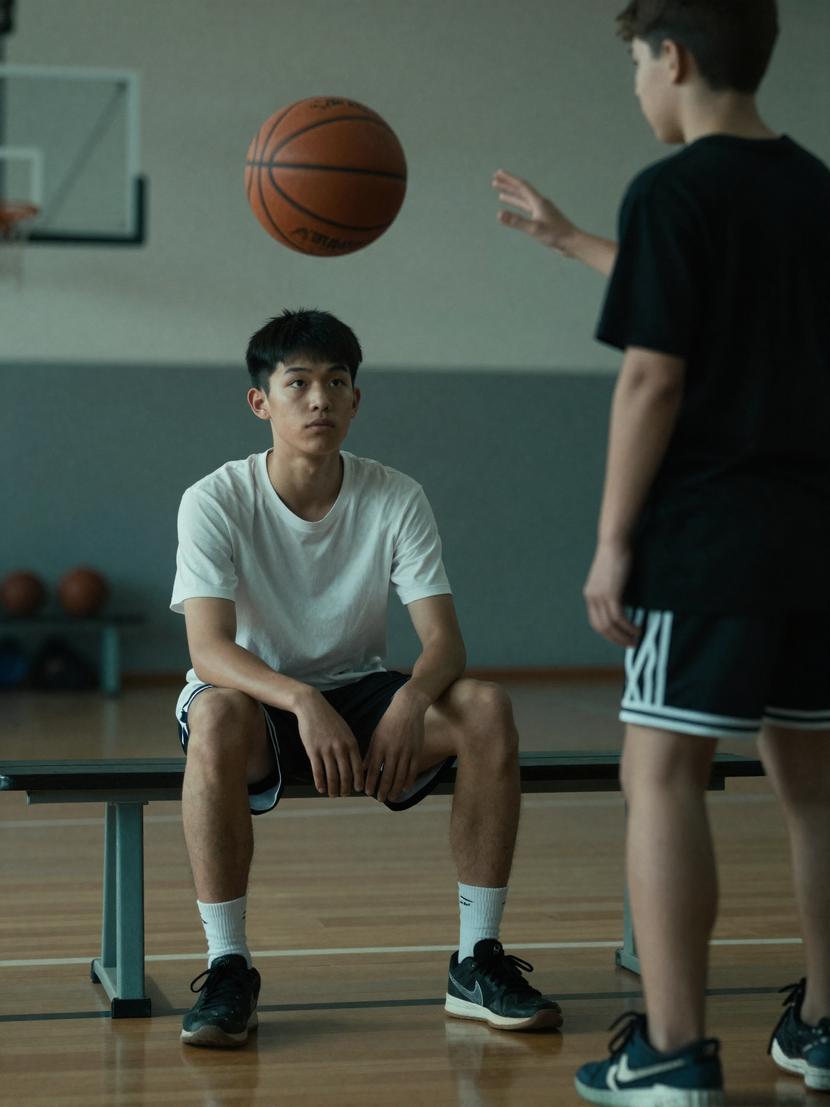
In a place bursting with teenage chatter and clattering sneakers, the gym felt like a battleground more than a playground. It was blaring with sounds—loud music, shouts, and the endless hum of restless youth—typical of a physical education class where the stakes were never about winning the game, but rather surviving the social jungle.
For him, PE was never about sportsmanship or glory. It was a silent endurance test against sidelong glances and whispered judgments, a constant navigation through an invisible pecking order he wasn’t invited to join.
That day, he ran farther, faster, pushing his limits as if each breath scorched away the mounting weight inside his mind. Sweat dripped from his brow as he finally flopped onto the bench, desperate for a moment’s quiet—the kind of silence that lets you breathe again, if only for seconds.
But peace was elusive.
Across the gym, unnoticed, a boy lifted a basketball. The sound of gathering laughter was the only warning he never heard coming. Then came the sharp, dull thud as the ball collided with the side of his head.
Laughter erupted—cold, merciless, and deafening. Not a single voice asked if he was hurt. No one dared pause to wonder if he’d shaken off the sudden sting. Instead, the room seemed to expect him to shrink back into the shadows, just as always.
Phones emerged—flashes and jokes flying from every corner. Someone, predictably, cracked a joke at his expense.
The boy who threw the ball wasn’t a villain scripted for cruelty. He wasn’t fueled by anger or hate. Instead, he wore confidence like armor, basking in the warmth of popularity and the comfort of a crowd divided and loyal. It was this ease, this simple entitlement, that cut the deepest.
He stayed planted, unmoving—didn’t rub his head, didn’t flare with anger, didn’t seek comfort or confrontation. Outwardly, he appeared calm, almost detached, but beneath the surface, something coiled tighter—a suffocating knot constricting with every mocking laugh.
For years, he clung to a fragile belief: that silence was strength.
He held fast to patience, telling himself if he just endured without retaliation, the tormentors would tire, and peace would eventually settle. He swallowed the humiliation, locked away his words, and kept his gaze low—believing invisibility was the shield he needed.
But sitting there on that unforgiving bench, while laughter thundered off the walls, clarity broke through like lightning.
Silence hadn’t guarded him. It had been a signal, a beacon inviting mistreatment.
There was no fury in this realization, only a profound awakening.
His breath slowed and deepened. The chaos around him seemed distant, muffled as if echoing from a faraway place.
When he rose, it wasn’t a sudden outburst or dramatic scene—it was the quiet assertion of someone reclaiming his space.
The laughter stumbled, faltered, as eyes caught the steel in his expression. No embarrassment shadowed his face. No apology was sought. No plea for mercy.
He met the gaze of the boy who had just humiliated him, his eyes calm but unyielding.
‘You’re making a very big mistake,’ he said, his voice steady—void of anger, filled instead with undeniable certainty.
The gym held its breath. No cheers. No sneers. Only a suspended moment in which the invisible rules had been broken and the balance shifted.
He didn’t stick around to fight or explain. No demands for apologies escaped his lips.
With calm resolve, he walked away, carrying the unspoken truth that some moments aren’t about words—they’re about choices.
And for the first time, he refused to vanish into the background.