
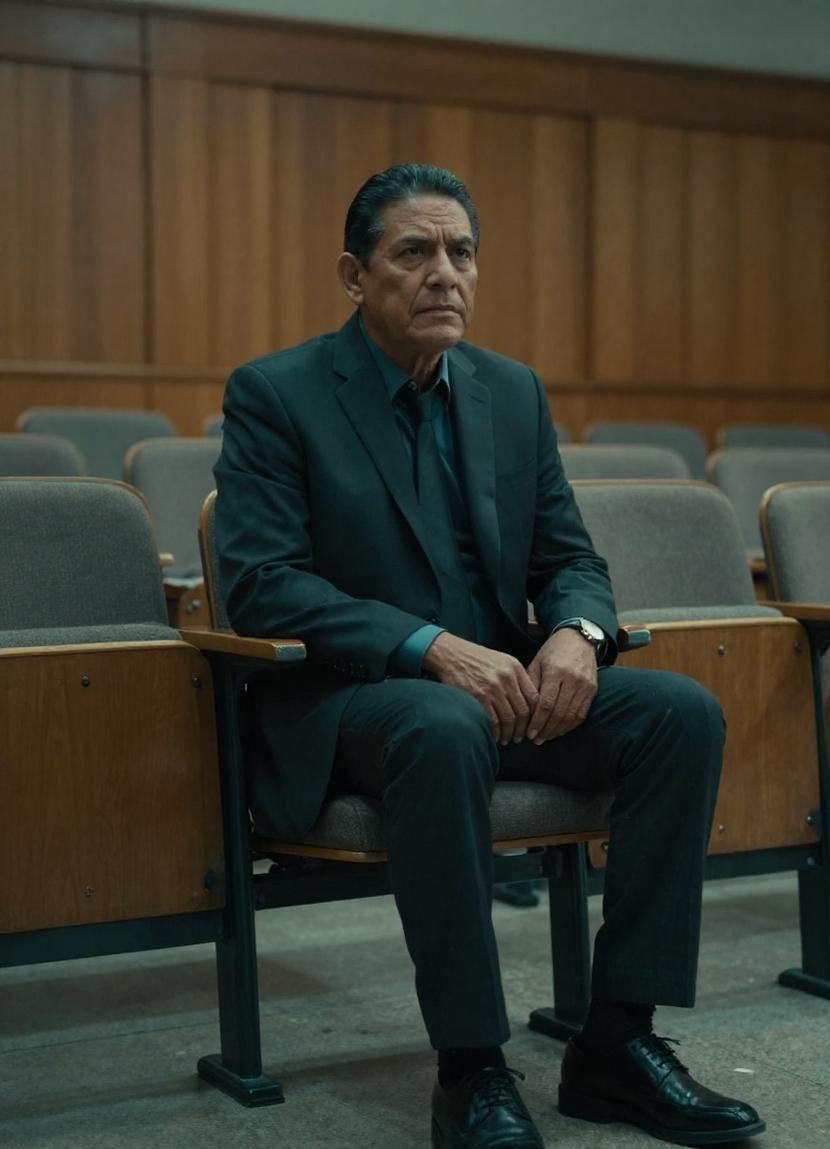
The auditorium was thick with the rich aroma of polished wood mingling with the faint, comforting scent of freshly printed programs. I had dreamed of this moment for years—the culmination of a long, arduous journey. Yet, when the applause finally settled, it wasn’t my diploma that captured the crowd’s attention. It was the unassuming figure in the last row, leaning forward with unwavering eyes locked on me. That man was Ricardo Mendoza—my stepfather—the quiet architect of my future, who built the foundation for my life long before I ever imagined earning a doctorate.
My childhood was far from a fairy tale. Isabel, my mother, had left my biological father when I was just a toddler. His face blurred into a haze over time, replaced by memories of vacant rooms and lingering questions that had no answers. Growing up in the humble town of Campo Verde, surrounded by endless rice paddies and dusty roads, life was raw and unforgiving. Love was measured in fleeting moments and a plate of meager food set on the kitchen table.
When I was four, Isabel gave me another chance at family by marrying Ricardo. He brought no wealth or status—only a battered toolbox, hands roughened by decades of toil, and a back bent by relentless labor. At first, I resented him. His skin forever dusted in cement, his boots leaving trails of dirt through the house, and his stories about construction sites I couldn’t begin to visualize left me feeling distant. But slowly, I glimpsed his quiet language of love. He mended my broken bicycle, patched the holes in my sandals, and rode his creaky bike mile after mile to shield me from bullies after school. He never raised his voice, never scolded. Once, he simply said:
— ‘You don’t have to call me father, but remember, I’ll always be here whenever you need someone.’
From that moment, calling him ‘Dad’ felt natural.
Life with Ricardo was simple, yet each day carried profound meaning. Every evening, he came home in a dirt-streaked uniform, exhaustion shadowing his face, but his first question was always gentle:
— ‘How was school today?’
He couldn’t help me solve calculus problems or analyze complex texts, but he believed fiercely in the power of education, often repeating:
— ‘Knowledge is something no one can ever take away. It will open doors that money can’t pry open.’
Our home was modest, but Ricardo’s steadfast spirit was a fortress. When I passed the entrance exam to Luna State University, Isabel cried tears of joy. Ricardo, however, sat silently on the porch, a cheap cigarette dangling between his lips, smoke curling into the evening air. The next morning, he sold his only motorbike, combined that money with my mother’s savings, and packed everything I needed for the leap into the city. With weathered hands and worn clothes, he handed me a box filled with simple food—rice, dried fish, roasted peanuts—and a final charge:
— ‘Work hard, son. Make every lesson count.’
Tucked inside the lunchbox, nestled between banana leaves, was a folded note:
— ‘I may not understand your books, but I know you. Whatever path you choose, I will stand behind you.’
Throughout my undergraduate studies and into graduate school, Ricardo never wavered. He continued to scale scaffolds, lay bricks, and extend his aching back year after year. Whenever I returned home, I’d find him at some construction site, wiping sweat from his forehead, as though the weight of my dreams was rolled into every brick he lifted.
I never found the words to tell him how deeply he inspired me. The grueling path to my PhD tested me in ways I never imagined, yet perseverance—an unspoken gift from him—carried me through.
On the morning of my dissertation defense at Nueva Esperanza University, I begged Ricardo to come. Hesitant but determined, he borrowed a suit that hung awkwardly on his frame, polished shoes that pinched his feet, and wore a stiff, new cap bought from the market. He took a seat at the back, sitting straight despite the pain lodged deep in his spine, his eyes steady and full of quiet pride.
After I finished, Professor Esteban Cruz made his way through the audience, shaking hands with the attendees. When he reached Ricardo, something seemed to ignite in his gaze. A slow smile, rich with memories and surprise, blossomed on his face:
— ‘Ricardo Mendoza, isn’t it? I grew up near a construction site in Santana District. There was a worker I never forgot—he carried an injured coworker down the scaffolding, risking his own safety. That was you, wasn’t it?’
Ricardo remained humble, nodding quietly. The professor’s voice thickened with emotion:
— ‘I never thought I would see you again. And now here you are, the father of a new PhD graduate. It is truly an honor.’
Glancing back, I caught Ricardo’s smile—eyes shimmering with unshed tears. In that moment, I understood something deeply true: he never sought recognition or reward. The seeds he planted through years of silent sacrifice had blossomed—not for him, but through me.
Today, I am a professor at Luna State University. I have my own family, and Ricardo has retired from the relentless grind of construction. Now, he tends a small garden, raises chickens, reads the morning paper, and pedals his bicycle around our neighborhood. Sometimes, he calls to boast about his flourishing tomato plants or to deliver fresh eggs for my children—his voice carrying the same warm humor it always has.
— ‘Do you ever regret all those years of hard work for your son?’ I once asked.
He let out a deep, contented laugh:
— ‘No regrets. I built my life, yes, but what makes me proudest is building you.’
Watching his hands dance over the phone screen, those same hands that hoisted bricks and bore life’s burdens for decades, I realize this undeniable truth:
I may carry a PhD, but Ricardo Mendoza is the true builder. He didn’t just raise walls—he built a life, one silent act of love and one invaluable lesson at a time.